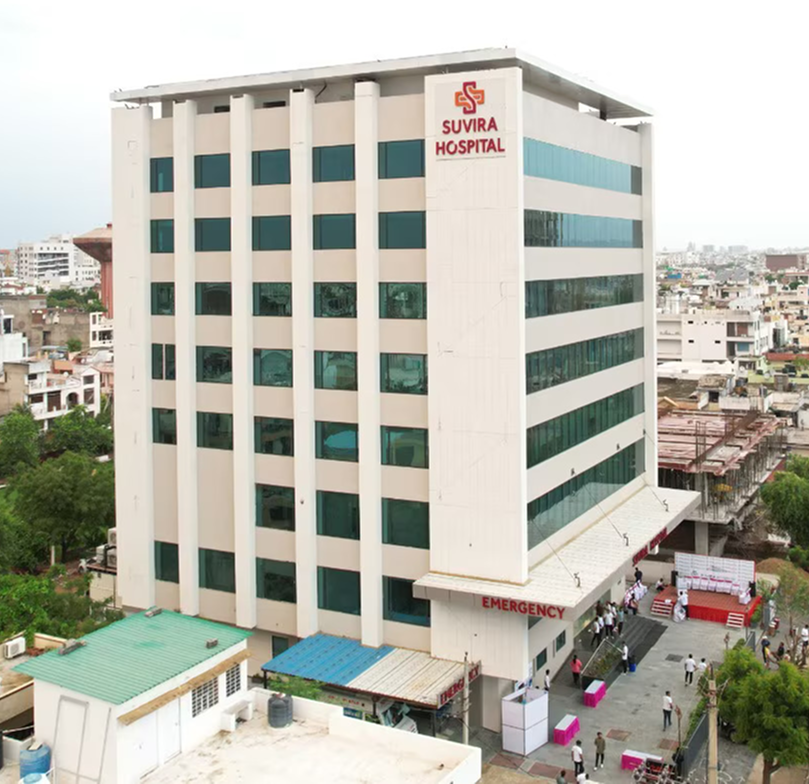

Gallstones are a prevalent cause of acute abdominal pain, bloating, and severe digestive discomfort among adults. Left untreated, gallstone disease can lead to serious medical complications including cholecystitis, pancreatitis, and jaundice. At Suvira Hospital in Jaipur, state-of-the-art laparoscopic gallbladder surgery offers patients a minimally invasive, high-precision treatment with rapid recovery times.
Understanding Gallbladder Disease and Gallstones
The gallbladder is a small, pear-shaped digestive organ situated beneath the liver on the upper right side of your abdomen. Its primary function is to store and concentrate bile—a digestive fluid produced by the liver that aids in breaking down dietary fats. However, imbalances in bile composition can lead to the crystallization of cholesterol or bilirubin, resulting in hard deposits known as gallstones (cholelithiasis).
Gallstones vary in size from small grains of sand to large golf balls. While some individuals carry asymptomatic gallstones, many experience painful blockages when stones migrate into the cystic duct or common bile duct.
Common Symptoms of Gallstone Attack
- Sudden, Intense Abdominal Pain: Localized in the upper right quadrant or epigastric region, often radiating to the right shoulder or back.
- Nausea and Vomiting: Frequently triggered after consuming rich, fatty, or fried meals.
- Indigestion and Bloating: Chronic abdominal fullness, gas, and discomfort after eating.
- Jaundice: Yellowing of the skin and eyes, indicating a obstructed bile duct.
- Fever and Chills: Symptoms suggesting acute bacterial infection (acute cholecystitis).
Why Laparoscopic Cholecystectomy is the Gold Standard
When gallstones become symptomatic, surgical removal of the gallbladder—known as a cholecystectomy—is the definitive and safest treatment. Medications designed to dissolve gallstones are rarely effective and carry high recurrence rates once treatment stops. Fortunately, advances in minimal access surgery have made gallbladder removal safer and far less invasive than traditional open surgery.
At Suvira Hospital in Jaipur, our surgical team utilizes keyhole laparoscopic technique. Rather than a large 5-to-7-inch abdominal incision, laparoscopic cholecystectomy requires only three or four tiny incisions ranging from 0.5 to 1 centimeter.
Key Advantages of Laparoscopic Surgery
- Minimal Pain & Scarring: Tiny incisions significantly lower post-operative pain and result in barely visible scars.
- Shorter Hospital Stay: Most patients are discharged within 24 to 48 hours following the procedure.
- Faster Return to Daily Routine: Normal non-strenuous activities can usually be resumed within 7 to 10 days.
- Reduced Risk of Infection: Minimally invasive procedures minimize tissue exposure, drastically cutting surgical site infection rates.
Diagnostic Workup Before Surgery at Suvira Hospital
Accurate diagnosis and meticulous pre-operative planning ensure maximum safety for every patient. When you visit the general surgery department at Suvira Hospital in Jaipur, our specialists perform a comprehensive clinical evaluation.
Diagnostic Tests Include:
- Abdominal Ultrasound: The primary, highly accurate imaging modality used to detect gallstones, gallbladder wall thickening, and fluid accumulation.
- Liver Function Tests (LFTs): Blood tests to check bilirubin and enzyme levels, evaluating whether gallstones are obstructing the bile ducts.
- MRCP (Magnetic Resonance Cholangiopancreatography): Advanced non-invasive MRI imaging utilized if bile duct stones are suspected.
- Routine Blood & Cardiac Workup: Complete blood counts, kidney function tests, ECG, and chest X-rays to ensure complete fitness for general anesthesia.
Step-by-Step: What Happens During Laparoscopic Gallbladder Removal
Understanding the procedure helps alleviate patient anxiety. Laparoscopic cholecystectomy is conducted under general anesthesia in our advanced, ultra-clean modular operating theaters.
- Step 1: Anesthesia & Port Creation: Once general anesthesia is administered, small 5-10 mm punctures are made in the abdomen.
- Step 2: Insufflation: Carbon dioxide gas is gently introduced to expand the abdominal cavity, creating a clear workspace for the surgical team.
- Step 3: High-Definition Visualization: A laparoscope—a slender tube equipped with a HD camera and light source—is inserted, projecting crystal-clear 3D images onto high-definition monitors.
- Step 4: Precision Dissection: Using specialized miniature instruments, the surgeon carefully isolates and clips the cystic duct and cystic artery, keeping nearby bile structures completely safe.
- Step 5: Extraction & Closure: The gallbladder is carefully removed inside a sterile endo-bag through one of the small incision ports. The incisions are then closed with dissolvable cosmetic sutures or surgical tape.
Post-Operative Recovery Timeline & Rehabilitation
Recovery from laparoscopic gallbladder surgery is straightforward for the vast majority of patients. Following structured medical guidance ensures a rapid, uncomplicated return to peak health.
In-Hospital Recovery (First 24 Hours)
Patients are monitored in the recovery suite until the effects of anesthesia wear off. Gentle walking is encouraged within a few hours post-surgery to promote circulation and minimize gas discomfort. Oral fluids are introduced gradually, followed by light meals.
At-Home Care & Dietary Transition
Since the human body continues to produce bile in the liver, digesting normal food remains entirely possible without a gallbladder. Bile now flows directly from the liver into the small intestine. However, a brief period of dietary adjustment is advisable:
- Days 1–5: Stick to low-fat, easily digestible, soft foods such as soups, porridge, boiled vegetables, and khichdi. Stay thoroughly hydrated.
- Weeks 2–3: Reintroduce normal high-fiber foods and lean proteins gradually. Avoid deep-fried, oily, or heavily spiced dishes during this transitional phase.
- Beyond 1 Month: Most patients digest a completely normal, healthy diet without any gastrointestinal side effects or restrictions.
When to Consult a General Surgeon at Suvira Hospital
If you experience recurring upper right abdominal pain, indigestion after fatty meals, or have been diagnosed with gallstones via ultrasound, prompt expert evaluation is essential. Delaying treatment can lead to acute inflammation, infection, or dangerous bile duct obstructions that require emergency interventions.
Suvira Hospital in Jaipur provides access to renowned general and laparoscopic surgeons, state-of-the-art diagnostic facilities, and compassionate post-operative care packages tailored to individual patient needs.
Frequently Asked Questions
Can a person live a normal life without a gallbladder?
Yes, absolutely. The gallbladder only stores bile; it does not produce it. After surgery, your liver continues to produce bile, which flows directly into the small intestine to digest food normally without long-term health consequences.
How many days of hospital stay are required for laparoscopic gallbladder surgery?
Most patients stay at Suvira Hospital in Jaipur for 24 to 48 hours following laparoscopic cholecystectomy, depending on their individual recovery progress and general clinical condition.
When can I return to work after laparoscopic gallbladder surgery?
Most patients working sedentary or desk jobs can safely return to work within 7 to 10 days post-surgery. Strenuous physical labor or heavy lifting should be avoided for 3 to 4 weeks.